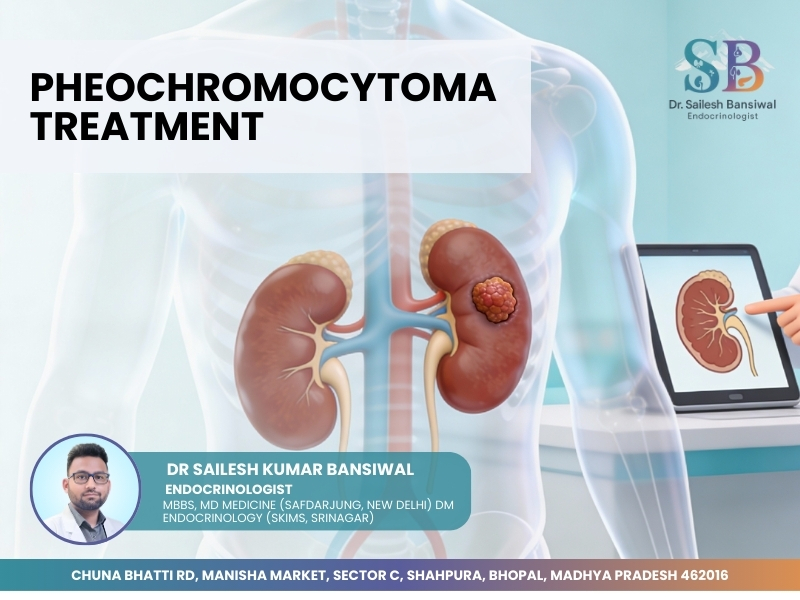
Pheochromocytoma is a long and difficult word, but the condition itself can be understood very simply. Many people live for years without knowing that this condition is the reason behind their sudden blood pressure attacks, fast heartbeat, or unexplained fear. With correct understanding and timely care, this condition can be treated safely. This blog explains pheochromocytoma in clear and easy language so that anyone can understand what is happening inside the body and why Pheochromocytoma treatment in Bhopal should always be handled by an experienced Endocrinologist in Bhopal.
Is Pheochromocytoma a Serious Condition?
Yes, pheochromocytoma is considered a serious condition but it is also treatable.
If left untreated, sudden hormone release can lead to:
- Very high blood pressure
- Heart rhythm problems
- Stroke
- Kidney damage
However, when detected early, Pheochromocytoma treatment in Bhopal gives excellent results. Many people return to a normal, healthy life after proper care.
Why Pheochromocytoma Causes Sudden High Blood Pressure
To understand this, imagine a switch inside the body that turns “stress mode” ON.
This switch is controlled by the adrenal glands.
In pheochromocytoma, this switch gets stuck in the ON position.
The adrenal gland releases a hormone called adrenaline. Normally, adrenaline is released only when the body needs quick energy—like during fear, running, or danger. It helps the heart beat faster and pushes blood strongly through blood vessels.
In pheochromocytoma, adrenaline is released suddenly and without any reason.
Because of this:
- Blood vessels become tight very quickly
- The heart pumps blood forcefully
- Blood pressure shoots up suddenly
This rise in blood pressure is not slow or gradual. It comes like a sudden wave. A person may feel fine one moment and then suddenly experience headache, sweating, or palpitations.
Normal High BP vs Pheochromocytoma High BP
This is very important to understand. Many patients come to me after years of BP treatment and say medicines are not working.
That’s when we think about Pheochromocytoma treatment in Bhopal.

Normal BP problem:
- BP rises slowly
- Usually stays high
- Controlled with regular medicines
Pheochromocytoma BP:
- BP rises suddenly
- Comes in attacks
- Goes up and down
Common Symptoms of Pheochromocytoma
Pheochromocytoma does not always show symptoms every day. In many cases, symptoms appear suddenly and then disappear, which makes the condition hard to notice. These symptoms happen because the adrenal gland releases too much stress hormone into the blood.
One of the most common signs is sudden high blood pressure. This blood pressure rise can happen at any time during rest, sleep, or simple daily activities. Because of this, many people later require proper Pheochromocytoma treatment in Bhopal after years of confusion.
Another common symptom is a severe headache that comes suddenly and feels different from normal headaches. Along with this, a person may experience a fast or pounding heartbeat, as if the heart is racing without physical effort.
Excessive sweating is also a frequent symptom. The body may start sweating heavily even in a cool environment. Some people notice shaking hands, pale skin, or sudden fear or anxiety without any clear reason.
How Hormone Imbalance Affects the Body
Hormones work like internal messengers. When adrenaline is released in excess:
- The heart beats faster
- Blood vessels tighten
- Blood pressure rises
- Sugar levels may increase
- Sleep becomes disturbed
This constant stress effect tires the body and mind. Proper Endocrinologist in Bhopal care helps bring hormone levels back to balance.
How Pheochromocytoma Is Diagnosed
Diagnosis involves a combination of medical history, blood tests, and scans.
Common diagnostic steps include:
- Blood tests to check hormone levels
- 24-hour urine test
- CT scan or MRI of adrenal glands
These tests confirm whether the adrenal gland is producing excess hormones and guide further adrenal tumor treatment in Bhopal.
Tests Used to Confirm Pheochromocytoma
The most reliable tests include:
- Plasma metanephrines
- Urinary catecholamines
- Imaging scans
These tests are safe and provide accurate results when interpreted by the Best Endocrinologist in Bhopal.
Treatment Options for Pheochromocytoma
Medical Stabilization
Before any procedure, blood pressure and heart rate are stabilized using medicines.
Surgical Treatment
In most cases, surgery is advised to remove the adrenal tumor. Surgery is planned only after proper hormonal control.
Post-Treatment Monitoring
Regular follow-up ensures hormone levels remain normal and prevents recurrence.
With correct Pheochromocytoma treatment in Bhopal, outcomes are usually very good.
Why Expertise Matters in Pheochromocytoma Treatment
Pheochromocytoma is rare and often misdiagnosed. Managing it requires:
- Knowledge of hormone behavior
- Understanding BP patterns
- Careful preparation before surgery
This is why choosing the Best endocrinologist for adrenal tumor care is essential.
When to Consult an Endocrinologist in Bhopal
Consult an Endocrinologist in Bhopal if:
- BP remains uncontrolled
- BP rises suddenly with headache and sweating
- BP medicines do not work
- There is a family history of adrenal tumors
Early consultation improves safety and treatment success.
Can Pheochromocytoma Be Prevented?
There is no guaranteed prevention, but early detection prevents complications. Regular health checkups and awareness of symptoms help identify the condition sooner.
Frequently Asked Questions
1. What exactly is pheochromocytoma?
Pheochromocytoma is a condition where a small tumor forms in the adrenal gland and releases too much stress hormone. This causes sudden high blood pressure, fast heartbeat, and sweating.
2. Is pheochromocytoma dangerous?
Yes, it can be serious if not treated on time. Sudden blood pressure spikes can affect the heart, brain, and kidneys. With proper Pheochromocytoma treatment in Bhopal, it can be safely managed.
3. What are the early warning signs of pheochromocytoma?
Common early signs include sudden headaches, heavy sweating, fast heartbeat, anxiety without reason, and sudden rise in blood pressure.
4. Can pheochromocytoma cause high blood pressure?
Yes. This condition causes sudden and severe blood pressure spikes because the adrenal gland releases excess hormones into the blood.
5. How is pheochromocytoma diagnosed?
Diagnosis is done through blood tests, urine tests, and scans that check hormone levels and adrenal glands. These tests help confirm the condition clearly.